
Karma of an Empire: Britain’s Fear of the Foreign Mirror | OFei Lens
Britain once ruled the world—now fears its return. This essay exposes how immigration is not a crisis, but the echo and reckoning of empire.
BUSINESS & CULTURE
Harriet Comley
11/11/20254 min read
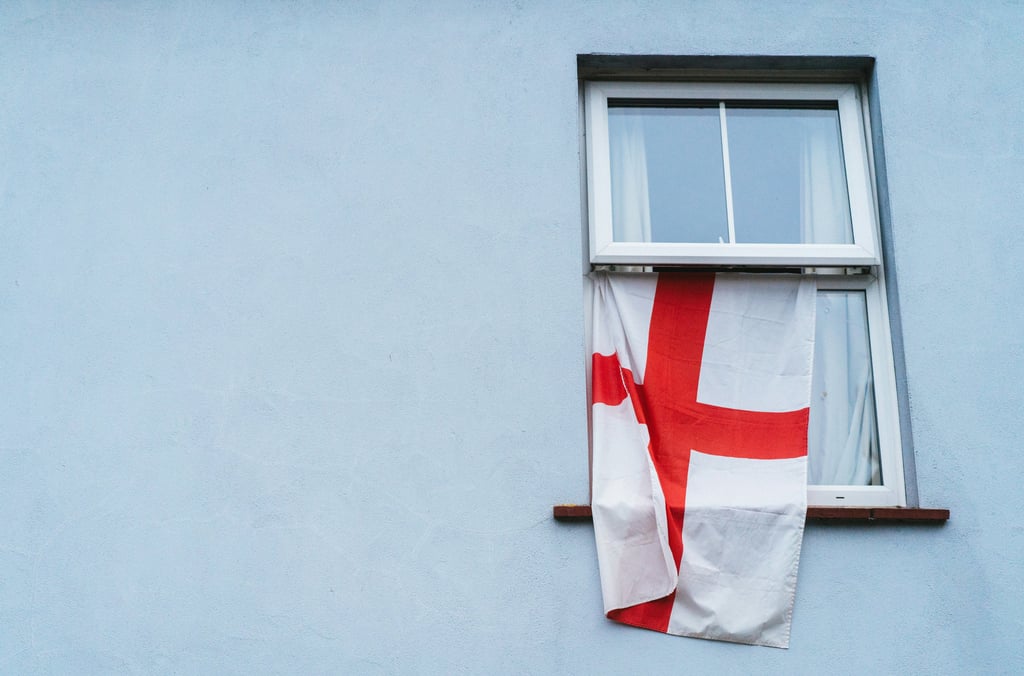
Britain spent centuries invading, occupying, and exploiting other nations, yet now trembles at the idea of people crossing its own borders. The same country that claimed to bring civilisation to the world cannot stand the sight of that world reflected back on its streets. It is not an immigration crisis. It is the echo of empire.
The British Empire once ruled almost a quarter of the planet, about four hundred million people across Africa, Asia, the Caribbean, and the Pacific. It drew wealth, labour, and resources from those lands, then repackaged the story as heroism. But history does not forget. The wealth of Britain was never self-made. It was extracted.
The Empire That Would Not End
The machinery of empire was brutal and global. The roots of British expansion go back to the late sixteenth century, when royal charters gave merchants and adventurers the right to claim and control foreign lands. By the nineteenth century, Britain was the world’s dominant naval power. Its ships controlled the seas, its banks financed empires within empires, and its flag flew over every continent.
The empire became the original version of globalisation, only without consent. Colonies were markets, resource zones, and testing grounds for a racial order that placed Britain at the top.
Take India. Before colonisation, India made up around a quarter of global industrial output. By 1900, after centuries of British control, it had fallen to about two percent. Wealth flowed out of Bengal and Bombay straight into London, leaving famine and poverty behind. In Africa, Asia, and the Caribbean, the pattern repeated. Raw materials, labour, and lives were taken, and in return came railways and “civilisation” that served Britain’s own interests.
The empire lasted for centuries, yet modern Britain treats multiculturalism as a temporary inconvenience.
Britain Today and the Fear of Reversal
Modern Britain lives in a state of denial. The same empire that once claimed the right to occupy, rule, and settle other people’s lands now insists that those people do not belong here. The language may have changed, but the hierarchy remains. Newspapers talk about “floods” and “invasions,” as if human beings were a natural disaster. Politicians speak of “small boats” and “taking back control,” as if control were a moral virtue.
In 2023, net migration to the United Kingdom was about 685,000 people. Most arrived to work, study, or join family. Many came from countries that Britain once ruled, including India, Nigeria, China, Pakistan, and Ukraine. Yet the national conversation tells them they are intruders.
The scale is not exceptional. Germany accepted around 1.2 million migrants in the same period. Canada welcomed nearly 470,000 new permanent residents in 2023 despite having half the UK’s population. The United States consistently receives more than 1 million immigrants a year. In comparison, Britain’s numbers are not extraordinary — they are the global norm for a major economy.
And yet, the same government that benefits from migrant labour and taxes portrays these people as a threat to national identity. The fear of reversal runs deep. Britain is not being overwhelmed by outsiders. It is being confronted by its own reflection. The faces on the streets of London, Birmingham, and Manchester are the living evidence of history’s return. The empire that went out into the world has simply found its way back.
The Karma of History
When a nation spends centuries crossing oceans to occupy other people’s lands, it should not be surprised when, one day, those people arrive at its shores. Immigration is not revenge. It is the slow return of history.
The descendants of empire now live in Britain’s cities, speak its language, and contribute to its economy. They are not here to conquer. They are the living evidence of what empire set in motion. The flow of people today mirrors the flow of power in the past — only this time, Britain is not in charge.
The Myths and the Numbers
The facts tell a different story from the fear. Immigrants make up around 15% of the population. They contribute more in taxes than they take in benefits. The National Health Service, universities, and logistics networks all depend on foreign labour.
By contrast, the British Empire drained unimaginable wealth from its colonies. One study estimates that Britain took the equivalent of sixty trillion dollars from India alone. That money built London’s wealth, its banks, its museums, and its myths. Yet the modern narrative insists that “foreigners are draining Britain.” History could not be clearer about who drained whom.
And unlike the empire’s invasions, today’s arrivals do not strip anyone of their culture or rights. When foreigners come to the United Kingdom, white Britons are not forced to abandon their language, their traditions, or their faith. Their land is not seized, their labour is not stolen, and their dignity is not denied. The presence of others does not erase British identity — that is, if Britain can even claim to have an identity at all, when so much of its history is built on monopolising everyone else’s.
The Cultural Blind Spot
Britain’s education system barely touches the truth of empire. Pupils can name kings and queens but not the countries those rulers destroyed. The national story presents colonisation as adventure, not aggression. Museums remain filled with stolen art, and politicians speak of empire with pride rather than apology.
I myself studied History at GCSE and A Level. I learnt about the American Civil Rights Movement, the Cold War, and Chinese dynasties. There were a few options to study British history, but none of them were labelled “British Colonialism.” That silence says everything. The system does not want to teach it because doing so would mean admitting what the country really was — and what it still benefits from today.
British values are advertised as fairness, decency, and the rule of law, yet those same values were denied to millions under British rule. The contradiction sits at the heart of the nation. A country that once claimed to civilise the world now complains that the world is coming to it.
The racism and resentment we see today are not new. They are the echoes of that same imperial thinking, a belief that Britain belongs to itself alone, and that others are forever outsiders. But history has a way of refusing to stay silent. The mirror is up. The reflection is uncomfortable.
A Reckoning, Not Revenge
Immigration is not the enemy. It is the mirror. The people arriving in Britain today are not invaders. They are the children and grandchildren of those the empire once ruled.
This is not a crisis. It is a reckoning. History has come home, and Britain must decide what to do with it. The empire built the world that now walks through its doors. The question is whether Britain will finally learn to live with the world it created, or continue to pretend, through its own deluded sense of self-worth, that it deserves to stand apart from it